Shorter Days, Heavier Moods: A Therapist’s Guide to the October Slide
Have you noticed that waking up has felt significantly harder this week? Or that your evening energy completely evaporates the moment the sun goes down? You aren’t failing; your body is trying to adjust to a new season. Welcome to the October Slide.
The October Slide is a phenomenon that describes the sudden drop in mood, focus, and physical energy that hits as daylight shrinks and temperatures drop. While this transition challenges anyone, it hits differently if you are navigating life with a neurodivergent brain (like ADHD or Autism) or a chronically ill body (such as POTS, fibromyalgia, or chronic fatigue). If you are struggling right now, you aren't lazy, and your body isn't failing. It is a physiological and emotional response to shrinking daylight, shifting hormones (like melatonin and serotonin), and dropping temperatures Your physical and neurological landscape is trying to adapt to a massive environmental shift.
Why the October Slide Hits Our Systems Harder:
The Melatonin and Dopamine Drop: Less sunlight triggers our brains to produce more melatonin (making us sluggish) and less serotonin and dopamine. For ADHDers who already chase dopamine, or autistic individuals sensitive to chemical shifts, this can manifest as severe executive dysfunction, profound brain fog, unshakeable fatigue, or a sudden spike in sensory overload.
Sensory Overload from Seasonal Gear: Autumn brings a dramatic change in sensory input. The transition to heavy jackets, stiff sweaters, scratchy blankets, and the constant hum of indoor heaters can spike sensory anxiety and drain your battery before your day even begins.
The Barometric and Temperature Flare: Shifting weather patterns change barometric pressure, which can trigger joint pain, migraines, and autonomic nervous system flares, depleting energy reserves. For clients with conditions like POTS, the sudden cold also means the body has to work twice as hard to regulate its internal temperature, leading to more profound physical exhaustion.
AccuWeather has a tab called “Health & Activities” where it gives ratings for arthritis, sinus pressure, common cold, flu, migraine, and asthma as these are all impacted by the weather. It can be a helpful tool to plan for the day.
The Loss of Routine and Momentum: Summer often allows for fluid schedules. The sharp transition into autumn means stricter demands at work or school, coupled with early holiday planning. For an executive functioning system that relies on momentum, this sudden shift can trigger quick burnout.
Season Transition: Historically, fall also means preparing for winter. Your brain naturally signals you to slow down, conserve energy, and crave comforting, carb-heavy foods.
So what can we do when doing even the bare minimum feels like too much? I have some suggestions for you!
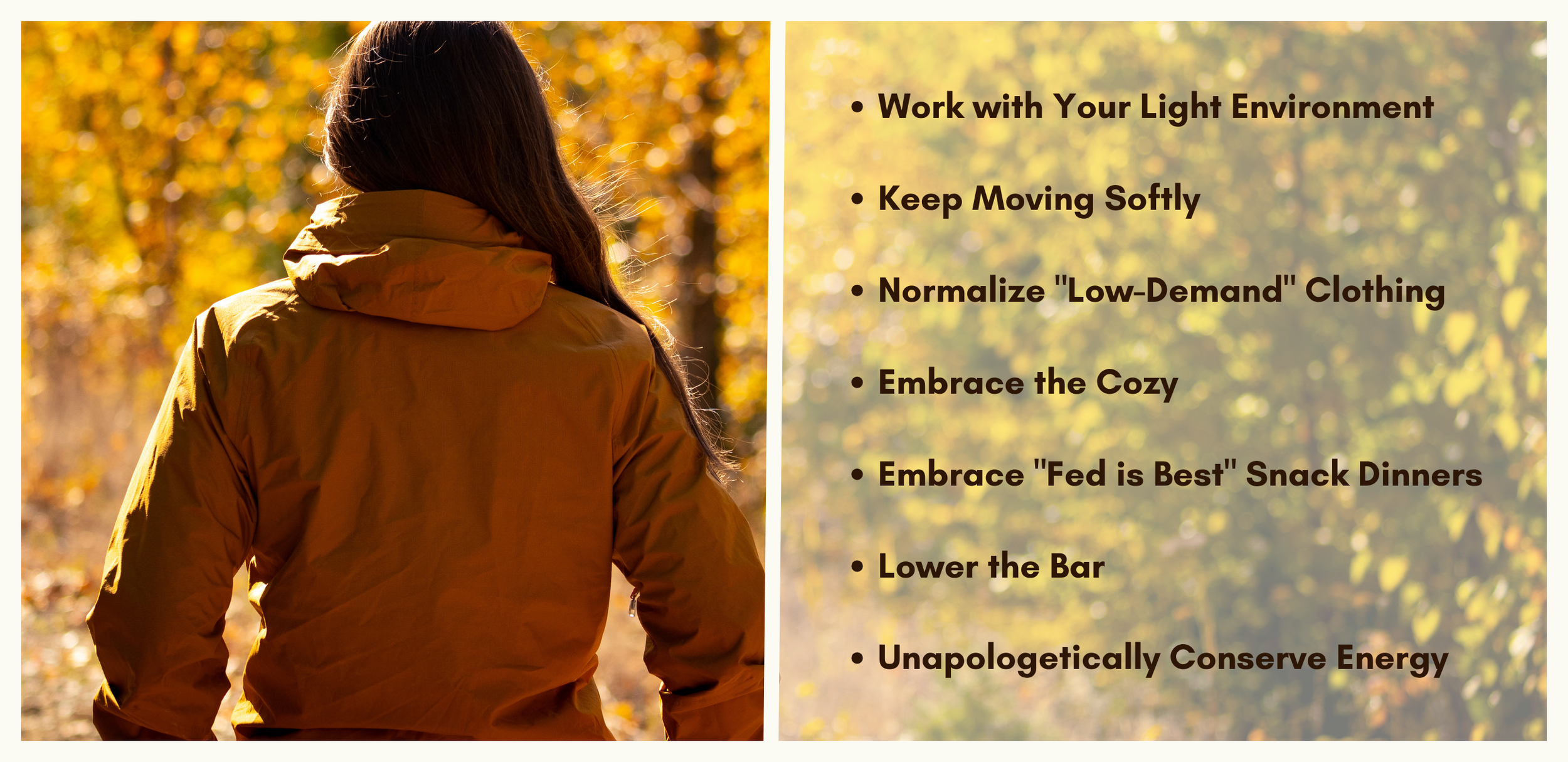
Work with Your Light Environment: If stepping outside into morning light feels too demanding for a chronically ill body or an executive functioning system, build an easier bridge. Sit near a bright window for 15 minutes while waking up, or look into a light therapy lamp (SAD lamp) right at your bedside so you can turn it on before you even get out of bed. Something as simple as leaving the curtains open can also help drastically.
Keep Moving, Softly: A light walk or gentle stretching can work wonders for your energy without draining your tank.
Normalize "Low-Demand" Clothing: Do not force yourself into restrictive or uncomfortable winter layers if they trigger sensory distress or pain. Give yourself permission to prioritize sensory comfort over fashion. If soft sweatpants, loose fleeces, or seamless socks are what keep your nervous system regulated, make that your uniform. It’s cozy season after all.
Embrace the Cozy: Instead of fighting the lower energy, reframe it. Warm drinks, comfortable clothes, and quiet evenings are great ways to lean into autumn.
Embrace "Fed is Best" Snack Dinners: When fatigue or executive dysfunction peaks, cooking a full dinner is a massive barrier. Lower the bar. Eating a "snack dinner," or as social media likes to call it “girl dinner,” composed of deli meats, crackers, cheese, fruit, or relying heavily on freezer meals is perfectly acceptable. Frozen fruits and veggies hold just as much, if not more, nutrients as fresh as they are often frozen at peak freshness. Nutrients count, no matter how much cooking goes into them.
Lower the Bar (even a little): You don't need to operate at 100% capacity every day. As we know, it's not realistic or healthy. Prioritize what actually needs to get done and let the rest wait. It's okay!
Unapologetically Conserve Energy: If your body needs to hibernate right now, let it. Transition your social connections to low-pressure spaces, like a text thread where no one expects an immediate reply, or a virtual parallel play hangout where you both watch a movie with your cameras off. Allow yourself to say no or to cancel plans if the energy changes the day of. This is the season of caring for ourselves and listening to our bodies.
Take a breath and go easy on yourself. The October Slide reminds us that humans are biological creatures, intimately connected to the earth's rhythms. We’re like bears but not as cute. You’re not doing anything wrong. It’s not your fault. You’re not “weak.” You’re at the mercy of biology.
Your neurodivergent or chronically ill system responds to the darkness by signaling you to slow down. The suffering often comes not from the slowing down itself, but from our internal demands to keep producing at a summer pace. If the autumn transition is hitting your system especially hard this year, give yourself grace and let yourself rest. Your body is signaling that it needs it. It’s okay to lower the bar and protect your energy.

Small Victories has current openings: in-person (Middletown, CT) and telehealth (anywhere in CT, NY, or MO). We can help you find the right therapist for you.